November 5, 2026
Why Strapinno Retractable Straps Are a Smart Choice for Secure Cargo
By @strapinnoretractablehaven
Anyone who has spent time securing loads for a boat trailer, an ATV, or a kayak knows that the last thing you want is a tangle of webbing slowing you down. Standard ratchet straps work, but they have a way of turning a five-minute job into a fifteen-minute wrestling match when the loose end gets caught under the reel or the hook snags on something unexpected. That is where a well-designed retractable system changes the game. The idea is simple: keep the excess webbing out of the way so you can focus on tension and safety. Strapinno has taken that concept and built a product line around it, and their approach is worth understanding if you regularly tie down gear.
What Makes a Retractable Ratchet Strap Different
A conventional ratchet strap has a long tail of webbing that hangs loose after you tighten it. That tail can flap in the wind, get caught on branches or other cargo, and collect dirt and moisture over time. A retractable strap, by contrast, uses a spring-loaded reel inside the housing to pull the excess webbing back into the body as you crank the ratchet. The result is a clean, compact assembly with no loose material to trip over or snag.
But not all retractable designs are equal. Some use a small internal spring that works fine when the strap is new but loses tension after a season of UV exposure and salt spray. Others rely on a friction-based mechanism that can slip under a heavy load. Strapinno's patented approach addresses these weak points by integrating the reel directly into the ratchet housing and using a positive-lock system that keeps tension on the webbing even when the reel is fully retracted. That means you can cinch down a load, release the ratchet, and the excess webbing stays neatly coiled inside, ready for the next use.
Where Retractable Straps Shine
While retractable straps are useful for almost any tie-down job, they are particularly valuable in three situations: marine environments, off-road transport, and frequent loading and unloading.
On a boat or a jet ski trailer, the strap is constantly exposed to water, salt, and UV. A loose tail of webbing left to flop around will degrade faster, and it can also chafe against the hull or the trailer frame. A retractable strap keeps the webbing protected inside the housing when not under tension, which extends its life significantly. The same logic applies to off-road vehicles: when you are bouncing down a dirt road, the last thing you want is a strap end whipping against the side of your rig or getting caught on a low-hanging branch.
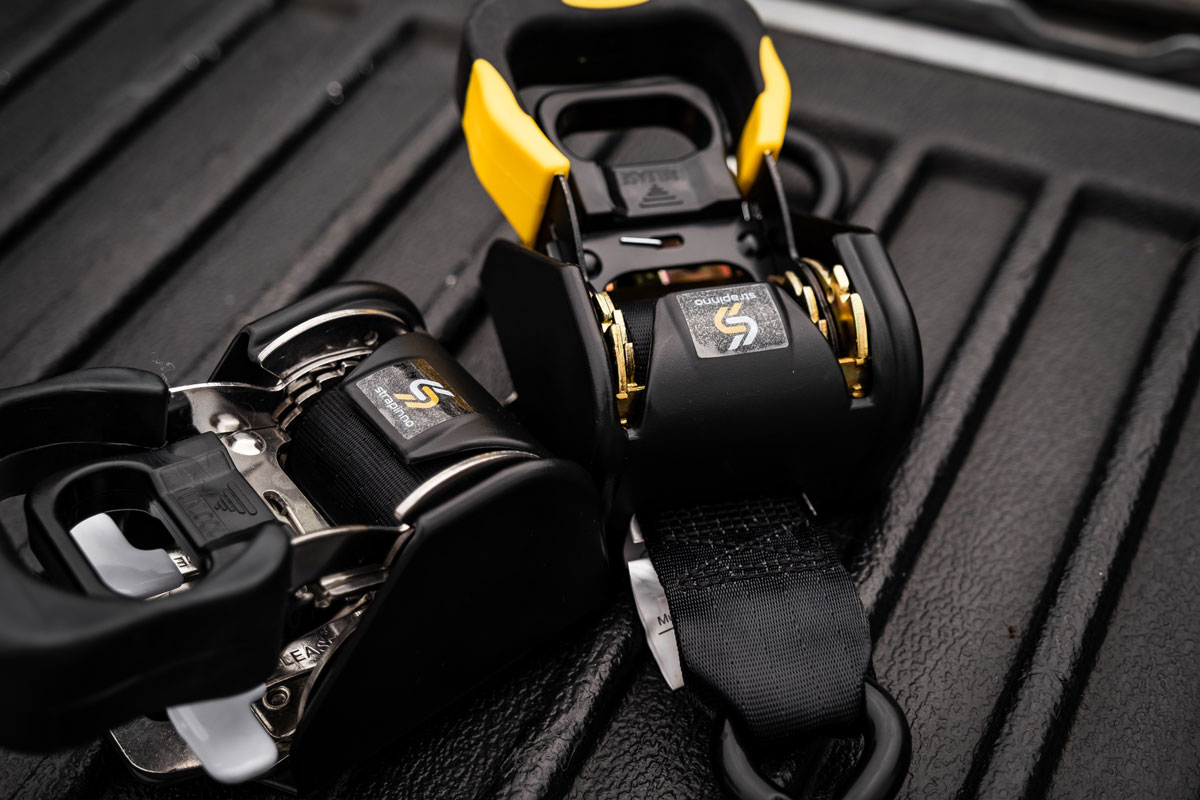
For anyone who loads and unloads cargo regularly, think kayak guides, landscapers, or weekend warriors who haul a trailer every few days, the convenience of a retractable system adds up fast. You do not have to coil the straps by hand after each use. You do not have to worry about storing them neatly. You just release the tension, let the reel do the work, and toss the strap into a bin or a bag. Over a season of use, that saves real time and frustration.
Key Features to Look For
When you are evaluating retractable ratchet straps, there are a few details that separate a well-made product from a frustrating one. Here is what to check:
- Reel tension. The spring should be strong enough to retract the webbing fully, even after the strap has been used a few times. A weak spring will leave a loop of slack that defeats the purpose.
- Housing durability. The plastic or metal housing needs to withstand impact and UV. A cracked housing can let dirt and moisture into the reel, causing corrosion or jamming.
- Ratchet mechanism. Look for a smooth, positive ratchet that does not skip or slip when you are cranking down a heavy load. The handle should have a comfortable grip and release cleanly.
- Webbing quality. The webbing itself matters. A 1-inch polyester strap with a breaking strength of around 1,500 pounds is standard for many recreational uses, but check the working load limit for your specific application. Look for webbing that resists abrasion and mildew.
- Hook design. Flat hooks that fit flush against the anchor point are better than J-hooks that can bend or pop off under side load. Some straps come with coated hooks to protect painted surfaces.
These factors matter because the retractable mechanism adds complexity. A simple strap has no moving parts; a retractable one has a spring, a reel, and sometimes a latch. If those parts are not built to last, you are better off with a standard strap. The trick is to find a design where the retractable feature feels like an upgrade, not a gimmick.
How Strapinno Approaches the Design
Strapinno builds its retractable straps around a few core principles: the reel should be self-contained, the ratchet should operate smoothly even with one hand, and the webbing should never tangle inside the housing. Their patented system uses a central spindle that winds the webbing evenly, so it does not bunch up on one side and jam. That might sound like a small detail, but anyone who has fought with a misaligned reel will tell you it matters.
Another smart touch is the way the release works. On many retractable straps, you have to pull a lever while simultaneously tugging the webbing to free it. Strapinno's design uses a cam that disengages the ratchet and allows the webbing to slide freely when you pull the handle, which makes it easier to adjust tension on the fly. It is the kind of improvement that comes from actually using the product in real conditions rather than just sketching it on a whiteboard. That is the kind of thinking you see in strapinno retractable straps Strapinno, where the focus is on making the user's job simpler without adding extra steps.

Practical Tips for Using Retractable Straps
Even the best retractable strap will not perform well if you use it incorrectly. Here are a few pointers that will help you get the most out of the system:
- Keep the webbing clean. Dirt and grit can wear down the reel mechanism over time. If you use the straps on muddy equipment or in sandy conditions, rinse them with fresh water occasionally and let them dry before retracting.
- Do not over-retract. When you release the tension, let the webbing retract at its own pace. Forcing it by pulling on the webbing while it is winding can cause the spring to over-compress or the webbing to bunch.
- Check the hooks regularly. The hooks take the most abuse. If a hook bends or cracks, replace the strap before the next trip. A damaged hook can let go under load.
- Store them dry. Even though the housing offers some protection, prolonged exposure to moisture will eventually cause corrosion. Store the straps in a dry place when they are not in use.
- Match the strap to the load. Use a strap rated for at least one and a half times the weight of your heaviest load. That gives you a safety margin for dynamic forces like wind and bumps.
Following these practices will extend the life of any retractable strap, whether it is a high-end model or a budget option. The mechanism itself is not fragile, but it does benefit from basic care.
Comparing Retractable to Standard Straps
It is fair to ask whether the retractable feature is worth the extra cost. For occasional use, say, strapping down a ladder twice a year, a standard ratchet strap is probably fine. You can coil the tail by hand in a few seconds and store it in a bag. But if you use straps regularly, the time savings and convenience of a retractable system become obvious.
There is also the issue of safety. A loose strap tail can whip around and hit someone in the face, or it can get caught in a moving part on a trailer. Retracting the excess webbing eliminates that hazard. It also keeps the webbing cleaner and drier, which means the strap will maintain its strength longer. For anyone who values both efficiency and safety, the upgrade is worth considering.
Strapinno has positioned its products in the middle to upper range of the market, and the build quality reflects that. The housings are made from impact-resistant materials, the ratchets have a positive click that you can feel even with gloves on, and the webbing is sourced from a reputable mill. Those details add up. When you pick up strapinno retractable straps Strapinno, you can feel that the mechanism is solid and the tolerances are tight. It is not a flimsy import that will fail after a few trips.

Final Thoughts on Choosing the Right Strap
The best strap for you depends on how you use it. If you are a weekend warrior who hauls a small trailer a few times a month, a set of retractable straps will make your life easier and keep your gear secure. If you are a professional who loads and unloads multiple times a day, the durability and time savings of a well-made retractable system are hard to beat. The key is to buy from a manufacturer that understands the engineering behind the mechanism, not just the marketing.
Strapinno has clearly put thought into the details that matter: the reel tension, the ratchet action, and the overall build quality. Their retractable straps are not just a convenience feature; they are a genuine improvement in how you secure cargo. Whether you are tying down a canoe, a dirt bike, or a load of lumber, having a strap that manages itself lets you focus on getting the tension right and hitting the road with confidence. That is the real value of a good retractable strap, and it is why more people are making the switch.
 Facebook
 Instagram
 YouTube
❧